
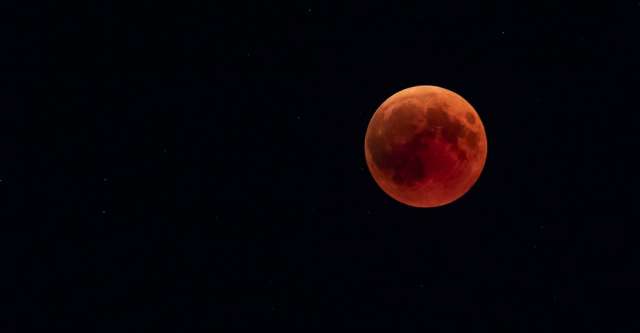
We are still recovering from the effects of the total eclipse in 2024. Then Europe experienced an eclipse on August 12. Now we can view the other end: a lunar eclipse!
And it will be here in Missouri!
Who Can See It?
Virtually all of the contiguous U.S., the eastern two-thirds of Canada, and all of South America will get to watch the umbral shadow cover and uncover the lunar disk. The northwestern U.S. and Canada will see the partial eclipse already in progress as the Moon rises. In Contrast, Europe, Africa, and the Middle East will see the Moon set during the partial phase.
During the eclipse, Earth’s shadow will gradually creep across the face of the full Moon until the entire lunar disk glows deep orange or red. Then the sequence of events unfolds in reverse order until the shadow completely leaves the lunar disk and the Moon returns to full brilliance.
When To View
Unlike a total solar eclipse, which can only be seen from a long, narrow track across Earth’s surface, a lunar eclipse can be watched from the entire nighttime hemisphere facing the Moon. Lunar eclipses are longer than solar eclipses, too, so you’ll have plenty of time (well over an hour) to enjoy this one.
The partial eclipse will begin on August 27 at 9:33 pm. The greatest eclipse will be at 11:13 pm.
What Is A Lunar Eclipse?
A lunar eclipse happens when the Sun, Earth, and a full Moon form a near-perfect lineup in space, known as syzygy. The Moon gradually slides into Earth’s shadow until most of the lunar disk turns from silvery gray to a dim, eerie orange or red. Then events unfold in reverse order until the Moon returns to full brilliance.
You’ll only need your eyes to witness the spectacle unfold, and no special eye protection. However, the eclipsed Moon will look even more striking through binoculars or a small telescope.
This is something to plan for and be awake to view!
