
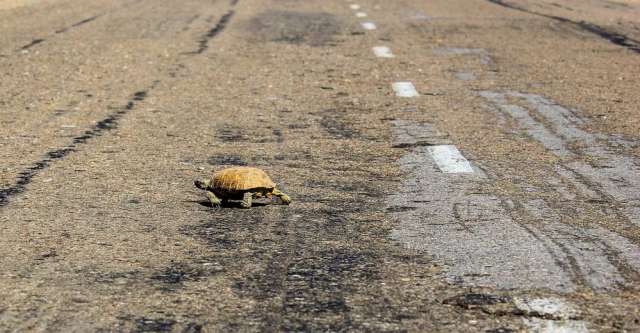
The Missouri Department of Conservation (MDC) encourages motorists to slow down and give turtles a break as they cross roads this spring. Warmer weather and spring rains prompt turtles to emerge from their burrows and search for food and mates. This activity leads many turtles across roadways, putting them at risk of being injured or killed by vehicles. MDC encourages motorists to give turtles a “brake”.
Species and Behaviors
Three-toed box turtles, ornate box turtles, and common snapping turtles are frequently seen crossing Missouri roads. Turtles generally live in a small habitat area but can wander up to six miles. Young males make up the majority of these travelers as they seek their own territory and females. Female turtles also cross roads to find nesting sites.
Turtles generally live in a small habitat area but can wander up to six miles.
Because turtles are cold-blooded, they seek out warm surfaces. They often bask on warm asphalt roads during cool spring days.
Safety and Collaboration
The MDC asks drivers to slow down when they spot a turtle and, if possible, safely steer around it. If a person chooses to help a turtle cross the road, the MDC states that human safety must be the top priority. People should check for traffic and move the turtle in the direction it was already traveling.
If a person chooses to help a turtle cross the road, the MDC states that human safety must be the top priority.
Leave Wildlife Wild
Finally, the MDC advises the public to leave wild turtles where they are. Taking a wild turtle home to keep as a pet often results in a slow death for the animal.
